
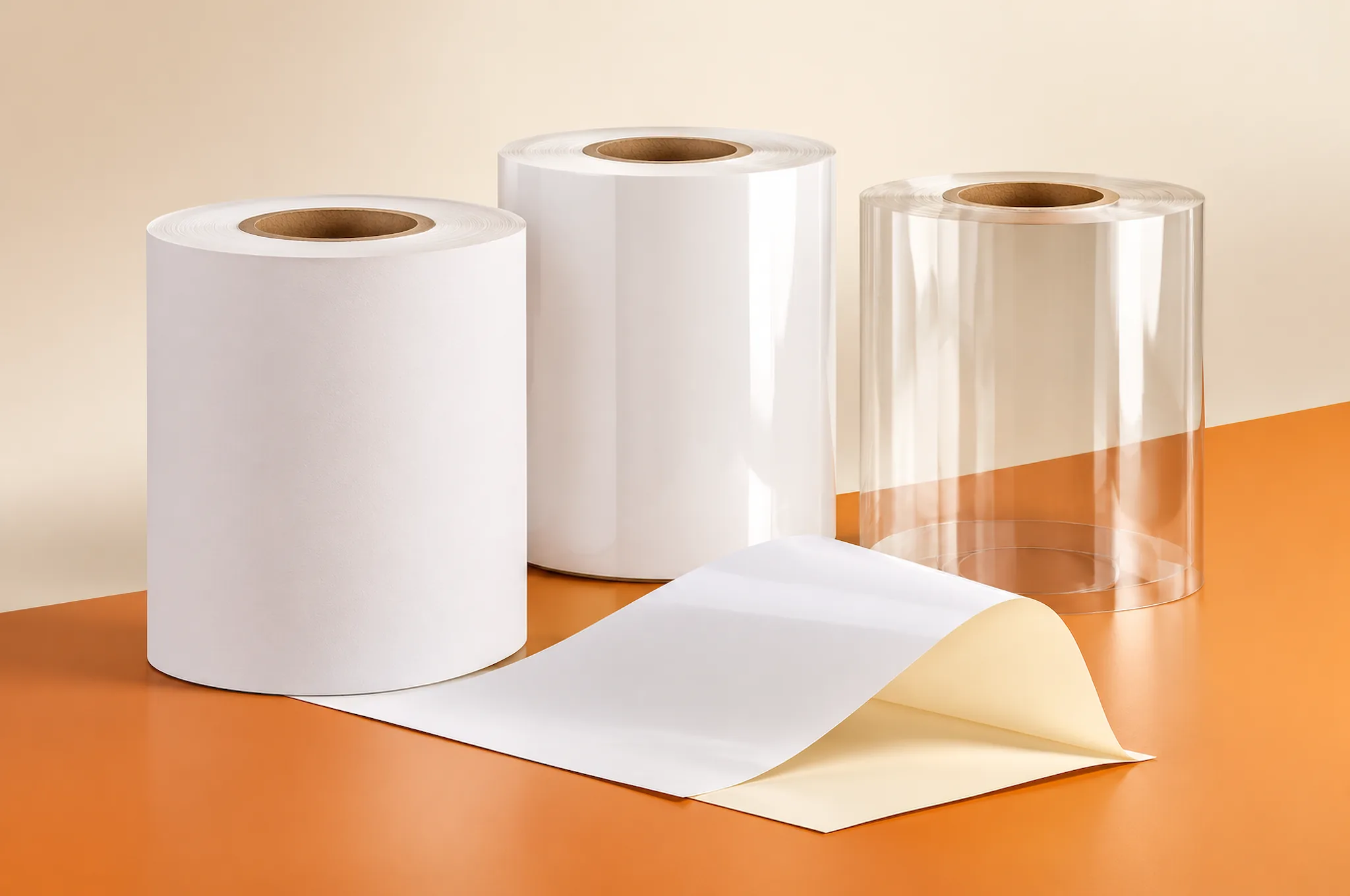
Choose paper face stocks for print and feel
Coated paper supports smooth graphics and barcodes, while uncoated paper provides a more natural or writeable surface. Thermal face stock is used when the finished label will print without ribbon.
Select the face stock with both the end use and the converter process in mind.
Use film where paper cannot meet the environment
BOPP, PET and PP film constructions provide moisture resistance and tear strength for bottles, curved packs and longer-life identification.
Film changes die pressure, matrix behaviour and web tension. A converter moving from paper to film should approve a trial on its own line.
Pair adhesive and liner
The adhesive must bond to the intended substrate while the liner must release consistently through die cutting and application. Paper and film liners offer different stiffness and tolerance.
State the application surface and the converter release requirement rather than naming only the adhesive family.
Specify jumbo-roll geometry and splices
Jumbo material needs width, outside diameter, core and winding values. Splice count and splice marking affect usable output and press stops.
Record total calliper and tolerance as well as pallet protection so repeat rolls behave consistently during slitting and die cutting.
Purchasing checklist
Points to confirm before quotation
- Face stock fits converting and end use
- Film trial completed when relevant
- Adhesive and liner approved together
- Width, core and diameter confirmed
- Splice rules written
- Calliper tolerance recorded